

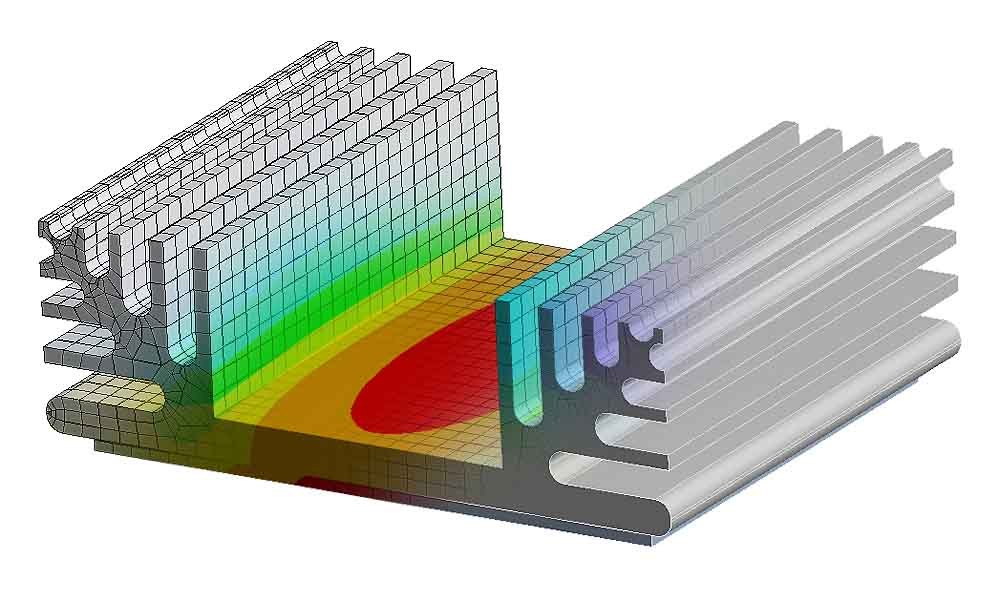
Tungsten heat sink serves industries where failure carries consequences that extend far beyond simple equipment replacement, operating in contexts where lives, mission success, or substantial financial investments rest on reliable thermal management. These applications demand materials that perform consistently under conditions that would degrade or destroy conventional cooling solutions. Understanding where and why tungsten finds its place in aerospace, optics, and electronics reveals not just technical requirements but the evolving relationship between material science and the increasingly demanding performance expectations of modern technology.
Aerospace Applications and Their Demands
The aerospace sector presents perhaps the most unforgiving operating environment for electronic systems. Equipment must function across temperature extremes from stratospheric cold to the heat of electronic enclosures in direct sunlight. Vibration, shock, and radiation exposure add layers of stress. Perhaps most critically, repair opportunities range from difficult to impossible once systems deploy.
Tungsten heat sinks address several specific challenges in aerospace electronics. Satellite communications systems rely on high-power amplifiers that operate continuously for years without maintenance. These amplifiers generate substantial heat in compact spaces where traditional cooling approaches prove inadequate. The dimensional stability tungsten provides prevents the thermal cycling failures that would occur with materials having higher thermal expansion coefficients.
Radar systems in military and civilian aircraft use gallium nitride power transistors that produce intense heat during operation. The thermal expansion match between tungsten and gallium nitride prevents interface degradation over the thousands of operational hours these systems accumulate. Singapore’s Tungsten heat sink manufacturers supply components for these applications, where the material’s reliability justifies its cost premium.
Additional aerospace applications include:
- Avionics processing units handling flight control and navigation
- Power distribution systems managing electrical loads throughout aircraft
- Sensor packages requiring thermal stability for accurate measurements
- Laser rangefinders and targeting systems in defence platforms
- Solar array power conditioning electronics in satellites
Optical Systems and Precision Requirements
The optics industry demands thermal management that goes beyond simply removing heat. Temperature variations affect optical properties, causing wavelength drift, power fluctuations, and beam quality degradation. Tungsten thermal management solutions address these precision requirements through dimensional stability and predictable thermal behaviour.
High-power laser systems represent the most demanding optical applications. Industrial cutting and welding lasers operate at kilowatt power levels, concentrating that energy into laser diode bars measuring centimetres in length. Temperature variations of even a few degrees shift the output wavelength, affecting process quality and potentially damaging downstream optical components.
Medical lasers face similar requirements with added complexity. Surgical procedures depend on precise energy delivery. Laser hair removal, vision correction, and dental applications all require consistent power output and beam characteristics that depend on stable operating temperatures. The tungsten heat dissipation properties provide the thermal buffering these systems need.
Telecommunications applications use laser diodes to transmit data through optical fibres. Data centres handling internet traffic, long-haul telecommunications links, and 5G wireless networks all rely on optical transmitters operating continuously at elevated power levels. Temperature stability directly affects signal quality and transmission reliability. Singapore’s Tungsten heat sink industry serves this sector by producing components that maintain tight temperature control across varying ambient conditions.
Optical applications specifically benefit from:
- Minimal thermal expansion that prevents optical misalignment
- High thermal mass that buffers power fluctuations
- Long-term dimensional stability maintaining critical tolerances
- Corrosion resistance in humid or corrosive environments
- Mechanical rigidity supporting precise optical mounting
Electronics Industry Applications
The electronics sector represents the broadest application base for tungsten heat sinks, spanning consumer devices to industrial equipment. As power densities increase and component sizes shrink, conventional thermal management approaches reach their limits.
Power electronics in industrial drives and renewable energy systems increasingly specify tungsten-based solutions. Silicon carbide and gallium nitride semiconductors enable higher efficiency and power density than traditional silicon devices, but they also generate concentrated heat that must be managed within tight thermal expansion constraints. The coefficient match between tungsten and these wide-bandgap semiconductors prevents the reliability issues that plagued early high-power implementations.
Electric vehicle charging infrastructure pushes similar boundaries. Fast charging stations deliver hundreds of kilowatts through power electronics that cycle on and off with each vehicle charge. The thermal transients created by these power cycles stress heat sink interfaces, making the expansion matching tungsten provides essential for long service life.
Consumer electronics have begun adopting tungsten thermal solutions in specific high-performance contexts. Gaming processors, graphics cards, and cryptocurrency mining equipment all push thermal limits. While cost constraints limit widespread tungsten adoption in these markets, niche applications where performance justifies premium pricing increasingly specify the material.
Industrial electronics applications include:
- Servo drives and motor controllers in manufacturing automation
- Power supplies for semiconductor fabrication equipment
- RF generators for plasma processing systems
- Induction heating systems for metal treatment
- Welding equipment power stages
The Common Thread
Across aerospace, optics, and electronics, tungsten heat sink applications share common characteristics. They operate in demanding conditions where conventional materials prove inadequate. Thermal cycling reliability matters more than initial cost. Compact thermal management enables designs that lighter materials cannot achieve. Most significantly, the consequences of thermal management failure justify the engineering effort and expense tungsten solutions require.
Singapore’s Tungsten heat sink manufacturing capabilities have developed in response to these demanding applications, building expertise in powder metallurgy, precision machining, and composite material production. The industry serves global markets where reliability, performance, and precision matter more than minimum initial cost.
Understanding these applications reveals how material selection connects to broader questions about reliability, performance, and the acceptable cost of preventing failure. The choice to specify a Tungsten heat sink reflects not just technical calculations but judgements about risk, lifetime value, and the importance of consistent performance in systems where thermal management failures carry consequences extending far beyond simple equipment replacement.