

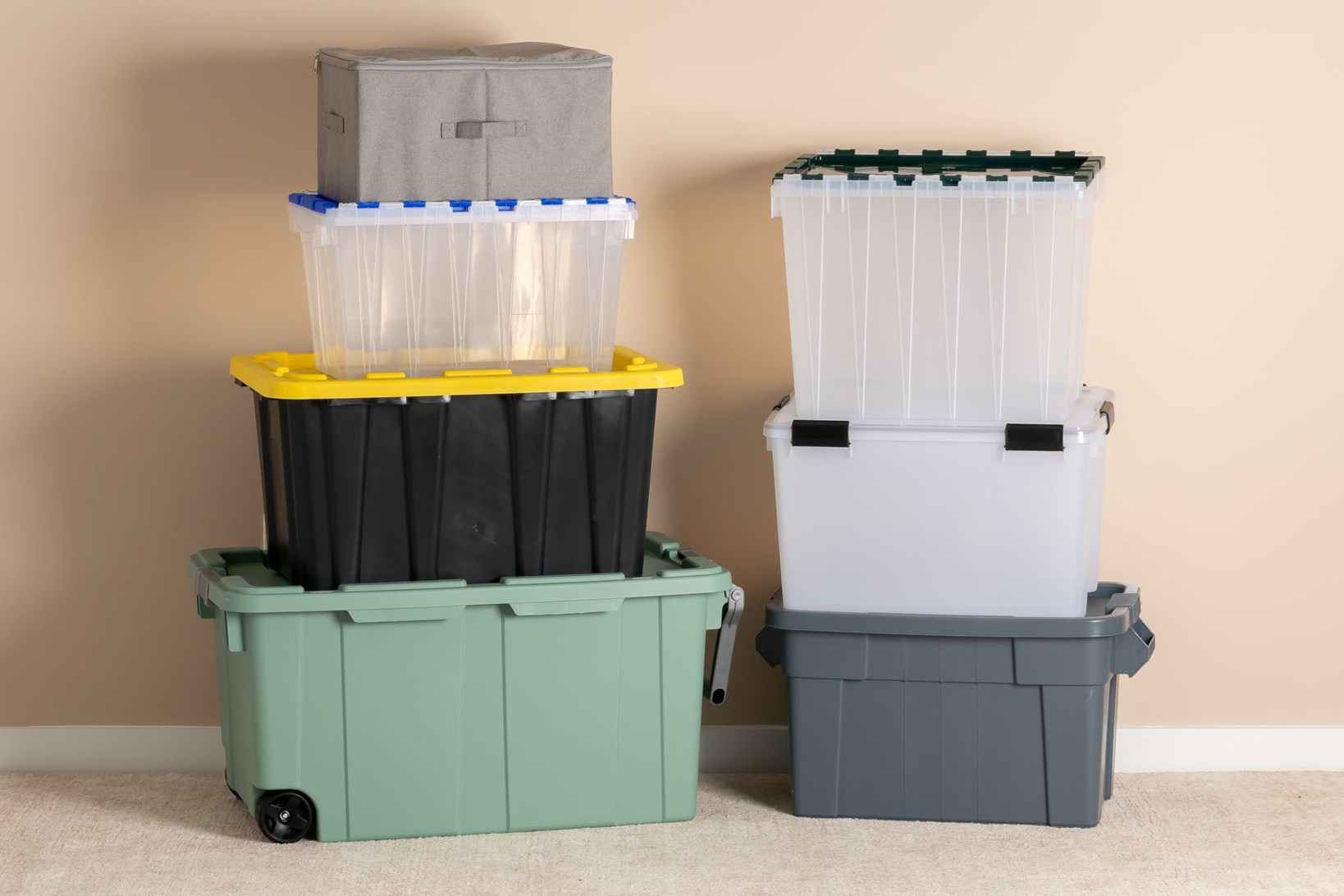
There is a particular kind of order that a well-chosen storage box plastic brings to a space, and it is the kind you notice most acutely in its absence. The garage where tools migrate across every available surface. The stockroom where nobody can locate what was just received yesterday. The kitchen cupboard that has become, over time, a archaeology of forgotten purchases. These are not problems of discipline or intent. They are problems of system, and the right plastic storage box is, in most cases, the beginning of the solution.
In Singapore, where the relationship between people and their available space is managed with a particular intensity, that solution carries additional weight. Whether in a three-room HDB flat, a retail back-of-house operation, or a logistics warehouse in Tuas, the plastic storage container performs the same essential function: it creates containment, imposes order, and protects contents from an environment that, left to its own devices, tends toward heat, humidity, and entropy.
Why Plastic Outperforms the Alternatives
The case for storage box plastic over other materials is not simply a matter of cost, though cost is part of it. It is a case built on the practical performance of the material across a wide range of conditions.
Wood absorbs moisture. In Singapore’s climate, untreated timber storage solutions warp, swell, and become hospitable to mould within a relatively short period. Metal corrodes, particularly in environments with chemical exposure or coastal humidity. Cardboard, still widely used in commercial settings, collapses under load, disintegrates in damp conditions, and offers no protection against pests.
Plastic, specifically high-density polyethylene and polypropylene, the materials most commonly used in quality plastic storage boxes, does none of these things. It repels moisture, resists a broad spectrum of chemicals, tolerates a wide temperature range, and maintains its structural integrity under repeated handling. It can be cleaned without special treatment and returned to service immediately. In a busy warehouse or a family home, that combination of properties is not a minor convenience. It is a genuine operational advantage.
The Benefits in a Home Setting
Space Optimisation
Singapore’s residential architecture places a consistent premium on vertical space. Stackable plastic storage boxes with interlocking bases allow households to build upward rather than outward, turning the height of a wardrobe, storeroom, or utility area into productive storage volume. A set of well-chosen containers can, in practice, double the usable storage capacity of a fixed space.
Protection Against Humidity and Pests
The sealed plastic storage container is one of the most effective defences against Singapore’s persistent humidity. Clothing stored in airtight boxes resists the mildew that forms readily in wardrobes and under-bed spaces. Documents and photographs survive long-term storage without the yellowing and brittleness that moisture accelerates. Food items stored in food-safe plastic storage boxes are protected from both humidity and the insect activity that warm climates encourage.
Visibility and Organisation
Many plastic storage boxes are manufactured in translucent or transparent variants, allowing the contents to be identified without opening the container. In a household context, this reduces the time spent searching and the disruption of pulling down and opening multiple containers to find one item. Combined with labelling, a system of clear plastic storage containers can transform a chaotic storage space into one that functions reliably.
The Benefits in Industrial and Commercial Settings
Load-Bearing Reliability
Industrial-grade plastic storage boxes are engineered to handle sustained loads that domestic containers are not designed for. In Singapore’s manufacturing and logistics sectors, containers rated for 50 to 100 kilograms of static load are stacked in columns several units high, holding components, finished goods, and raw materials through continuous cycles of loading and retrieval. The reinforced base geometry and thickened corner columns that characterise industrial plastic storage containers make this possible without the structural failures that would accompany the use of lighter alternatives.
Compatibility With Warehouse Infrastructure
Standardised dimensions are a feature of quality industrial plastic storage boxes that carries significant practical value. Containers built to align with Euro pallet footprints and standard racking systems integrate into existing warehouse infrastructure without modification. In Singapore’s logistics parks, where racking investments are substantial and floor space is expensive, this compatibility directly affects the economics of storage.
Hygiene and Regulatory Compliance
In food processing, pharmaceutical, and medical supply environments, the hygiene properties of plastic storage containers are not incidental. Smooth interior surfaces resist bacterial accumulation. Materials can be specified for food-safe or chemical-resistant applications. Containers can be cleaned with industrial washing systems and returned to service without degradation. These properties support compliance with the regulatory standards that govern food and pharmaceutical handling in Singapore.
Choosing Well From the Start
The benefits of plastic storage boxes are not automatic. They depend on choosing containers whose material, size, and structural specification match the demands of the application. A domestic-grade box asked to carry industrial loads will fail. An oversized container in a compact home creates handling problems that defeat its organisational purpose. The right container, properly specified and consistently used, delivers its benefits across years of service with minimal maintenance and no meaningful degradation.
In a home or a warehouse, on a factory floor or in a retail stockroom, the discipline of good storage begins with a single deliberate choice: the right storage box plastic for the job at hand.