

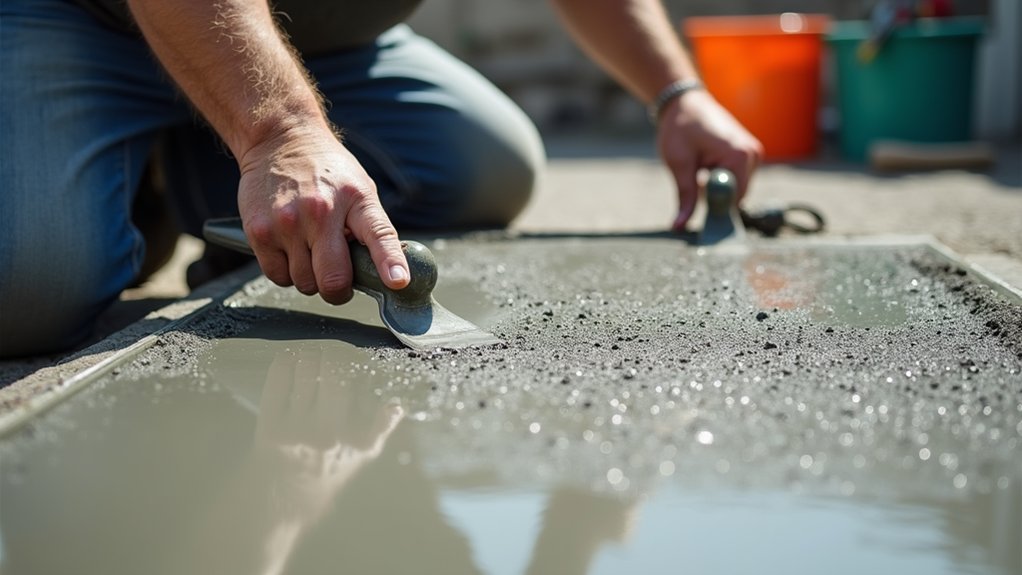
Concrete surfaces in commercial facilities carry heavy loads, constant foot traffic, and exposure to harsh elements. Over time, these factors lead to cracks, spalling, stains, and structural fatigue that diminish both performance and appearance. Professional restoration restores strength, enhances durability, and extends the service life of these surfaces.
Expert contractors approach restoration with a balance of technical precision and material science. High-quality commercial concrete restoration solutions combine detailed assessment, advanced repair systems, and proven installation methods to achieve dependable results. A strategic process ensures that repaired concrete performs reliably under demanding commercial conditions.
Comprehensive Surface Assessment and Preparation
Restoration begins with a detailed evaluation of the existing surface. Technicians inspect for structural cracks, moisture intrusion, scaling, and chemical damage to determine the depth and severity of deterioration. Diagnostic tools such as moisture meters and rebound hammers help identify hidden weaknesses beneath the surface layer.
Surface preparation follows the assessment phase and plays a decisive role in long-term performance. Mechanical methods such as shot blasting or grinding remove contaminants, laitance, and weak concrete. A clean and properly profiled substrate ensures strong adhesion for repair materials and protective coatings.
Crack Repair and Structural Reinforcement Techniques
Cracks signal stress within the slab and require targeted solutions. Epoxy or polyurethane injection restores structural integrity by bonding fractured sections and preventing water penetration. Routing and sealing methods address dormant cracks and reduce the risk of further expansion.
Severely damaged areas may require partial-depth or full-depth commercial concrete restoration solutions. High-strength repair mortars and polymer-modified materials restore load-bearing capacity while blending with surrounding surfaces. Reinforcement systems, including carbon fiber strips or embedded steel, provide additional stability where structural stress remains a concern.
Surface Resurfacing Systems for Renewed Performance
- Polymer-modified overlays create a durable new wearing surface that resists abrasion and chemical exposure.
- Microtoppings provide a smooth, uniform finish suitable for retail, hospitality, and office environments.
- Self-leveling cementitious systems correct uneven floors and deliver a seamless appearance.
- Decorative overlays enhance aesthetics while maintaining structural reliability.
- Bonded toppings increase thickness and extend service life in high-traffic zones.
Advanced Cleaning and Contaminant Removal Methods
- Pressure washing eliminates dirt, oil residue, and surface grime from exterior slabs.
- Chemical degreasers break down embedded contaminants in commercial kitchens and loading docks.
- Acid etching improves surface texture and prepares concrete for coatings.
- Steam cleaning removes stubborn buildup without introducing excessive moisture.
- Abrasive blasting clears coatings and opens pores for improved bonding.
Protective Coatings and Long-Term Preservation
Protective systems shield restored concrete from wear and environmental exposure. Epoxy coatings provide a resilient barrier against chemicals, heavy equipment, and moisture infiltration. Polyurethane topcoats add flexibility and UV resistance for areas exposed to sunlight.
Penetrating sealers offer protection while preserving the natural look of the substrate. These treatments reduce water absorption and prevent freeze-thaw damage in exterior applications. Proper curing and maintenance planning ensure that protective layers perform consistently across the lifespan of the surface.
Moisture Control and Substrate Stabilization
Moisture management remains critical in commercial environments where vapor transmission can weaken repairs. Vapor barriers and moisture-tolerant primers protect coatings from failure caused by trapped humidity. Concrete densifiers strengthen the substrate internally by reacting with free lime and forming a harder surface matrix.
Stabilization techniques enhance durability in areas exposed to heavy mechanical stress. Joint repair systems prevent edge deterioration and reduce impact damage from rolling loads. A well-stabilized slab supports both operational efficiency and occupant safety.
Commercial concrete surface restoration thus demands precision, expertise, and material knowledge. Strategic assessment, targeted repairs, and protective treatments ensure lasting performance. Professional methods transform damaged concrete into a durable and visually refined asset.
