

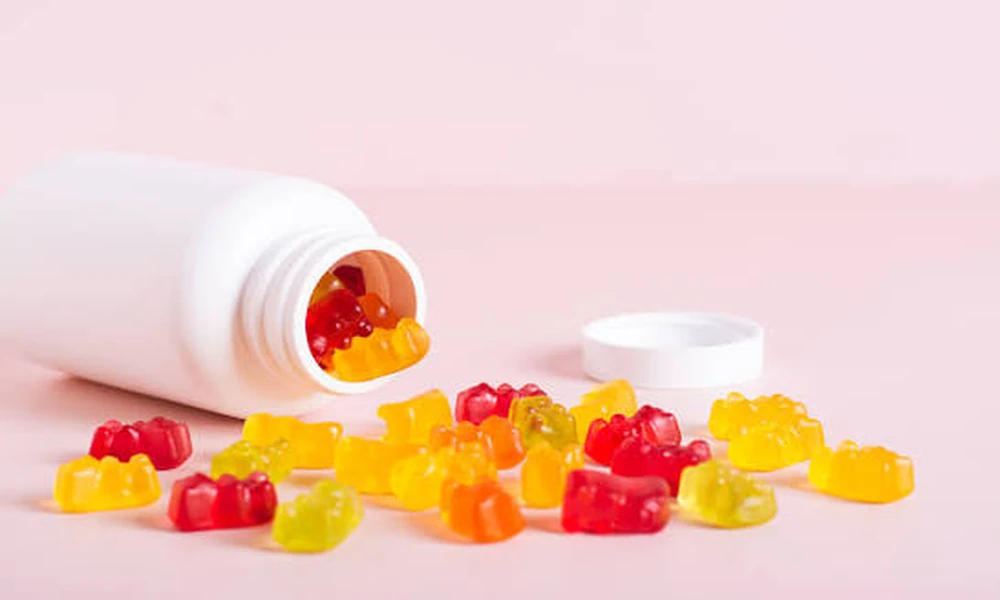
Live rosin gummies pressed from Jack Herer, Super Lemon Haze, or Durban Poison carry the richest terpene and cannabinoid profiles among sativa options right now. Fresh frozen sourcing holds onto aromatic compounds that ordinary processing burns off, and solventless pressing keeps minor cannabinoids travelling with THC instead of leaving them behind. Shoppers who rank the best sativa gummy by profile depth rather than milligram count end up at these products almost every time. Both halves of that profile follow below, terpenes first, cannabinoids after.
Terpene content by cultivar
Terpenes hand a sativa gummy its aroma, its flavour, and much of its daytime feel, and richness swings widely from jar to jar. A distillate piece can show almost nothing on the terpene panel. A live rosin gummy from a strong cultivar might carry two or three per cent total content. Super Lemon Haze tops most rankings on sheer volume, with limonene levels rarely matched anywhere else. Jack Herer comes next, heavy on terpinolene with pinene and caryophyllene alongside, giving the widest spread across separate compounds. Durban Poison contributes unusually concentrated terpinolene drawn from landrace genetics that modern crossbreeding never touched. Each one reads differently on the tongue and through the hours, which is why cultivar choice counts every bit as much as extraction method.
Cannabinoid spectrum in gummies
Cannabinoids make up the second half of a rich profile, and depth here marks out full-spectrum gummies from ordinary ones just as sharply. CBG turns up in small percentages and sits naturally beside an alert daytime character. CBC appears across full-spectrum extracts and adds weight to the broader entourage response. THCV shows in certain African landrace lines, Durban Poison genetics among them, while low levels of CBD often round sativa rosin out from below. Reading these entries takes seconds on a certificate of analysis, since laboratories gather every detected cannabinoid into one table. Four or five distinct compounds on that list point to a genuine spectrum. A lone THC line paired with added flavouring tells a far simpler story about what went into the batch.
Extraction guards profile richness
The extraction method settles how much of either half survives the trip into gummy form. Live rosin preserves the most, because ice water and pressure never heat the material enough to drive volatile compounds away. CO2 processing keeps a moderate amount, frequently topped up afterwards with reintroduced terpenes. Ethanol and hydrocarbon routes capture cannabinoids efficiently while losing most aromatic content during purging. Reading the extraction line on a package predicts richness before the lab sheet ever opens.
Verifying richness on certificates
Profile depth becomes verifiable the moment a certificate of analysis appears. Total terpene percentage sits near the top of most panels, and anything above one per cent marks genuine richness in an edible. Individual compound listings show which terpenes dominate, and they match the cultivar name on the jar when a producer works honestly. Cannabinoid tables place minor compounds beside THC, so four or five detected entries carry far more than a single line does. Batch dates matter here too, since terpene content fades across months on a shelf.
Terpene-rich sativa gummies trace back to named cultivars, solventless pressing, and complete lab papers every time. Super Lemon Haze brings the highest volume, Jack Herer the widest spread, Durban Poison the purest landrace concentration, and the certificate settles which jar actually delivers.